sweets from Tsuruya Yoshinobu and akafuku , both long established confectioneries.
Haiku on the package by Yamaguchi Seishi goes;
This house has a luck Swarrows come over To build their nest
Prior to cherry blossom season, sweets are hinting the blossoms, spring.
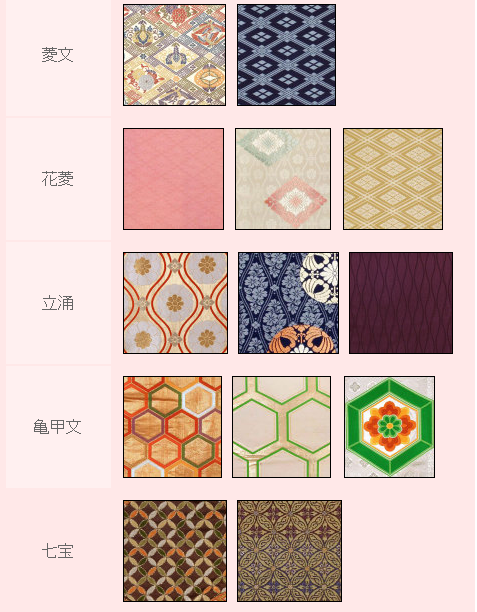
There are traditional patterns for the court nobles. They came over from ancient China and later got Japanized. They have been marked on the costumes and furniture as family emblem.
this is what we got when she tried kimono for court-ladies on. It is called ‘mukai-cho’, and represents “two butterflies facing each other.
this town of Hina dolls is also the home of merchants and has kept its traditional storehouses.
The box of fire extinguisher on the street has something on top of it,,, which is another set of the imperial hina dolls.
kakejiku , Japanese hanging scroll, is changed in tune with the season of Girls’ day.
standing type of imperial dolls on the scroll is closer to the origin of Hina dolls.
Hina dolls on a picnic in the garden
In some areas, they hang two pairs of 55 different kinds of lucky charms on strings, wishing their daughters’ happiness and health. Handmade crafts out of antique cloth by women.
The imperial couple is sitting inside the palace on the left. the warrior-guardians are standing and the manservants are by the fire in the garden
The court ladies are table setting on the corridor.
the ladies are playing the
fan tossing game.
On the lower tiers, they have household equipments. a cow carriage for the noble family... A set of tea things with a peacock painted on top of the shelf
chest of drawers. snow covered Mt. Fuji on the left of the sliding window, a vermillion shrine gate and flying birds on the right.
The second tier holds three court ladies ‘san-nin kanjo’’. Each holds sake equipment.
The third tier holds five male musicians ‘gonin bayashi’. Each holds a musical instrument, which are a small drum, large drum, hand drum, flute. the singer holds a folding fan(out of this photo).